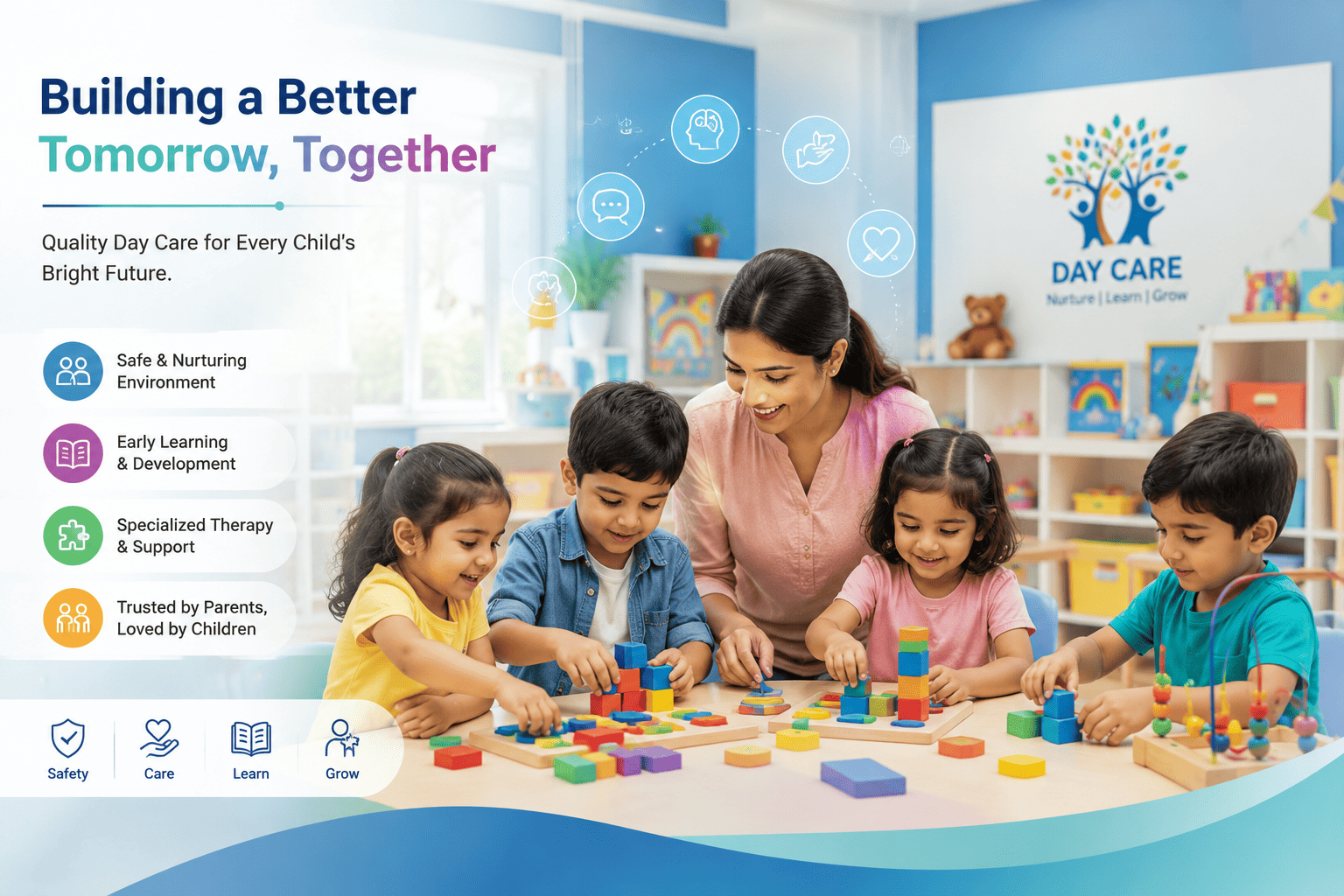
Day care centers play a vital role in supporting children's early growth, learning, and overall well-being. They provide a safe, nurturing, and stimulating environment where children can develop essential social, emotional, cognitive, and physical skills. With trained caregivers and structured daily activities, children learn through play, interaction, and exploration, helping them build confidence and independence from an early age.
Modern day care centers also focus on early childhood education by introducing age-appropriate learning experiences, creative activities, language development, and problem-solving skills. These programs prepare children for school while encouraging curiosity and a lifelong love of learning.
For children with developmental challenges, including autism spectrum disorder (ASD), day care centers often offer specialized therapy services such as speech therapy, occupational therapy, behavioral therapy, and sensory integration activities. These interventions help improve communication, social interaction, motor skills, and daily living abilities.
Parents also benefit from quality day care services, as they gain peace of mind knowing their children are receiving professional care in a secure environment. Regular communication between caregivers and families ensures that each child's progress, health, and developmental milestones are closely monitored.
As technology continues to transform childcare, modern Day Care ERP Systems help streamline daily operations, including child records, attendance, therapy sessions, appointments, staff management, billing, and parent communication. This improves efficiency, enhances service quality, and allows caregivers to focus more on children's development.
Conclusion:
A high-quality day care center is more than just a childcare facility—it is a foundation for lifelong learning, healthy development, and a brighter future for every child.